
educate
Why 'Fire Stop All Penetrations' Specs Cost You More Than You Think
Vague firestopping specs create budget overruns and delays. Learn what a proper survey report contains and why each element protects your programme.
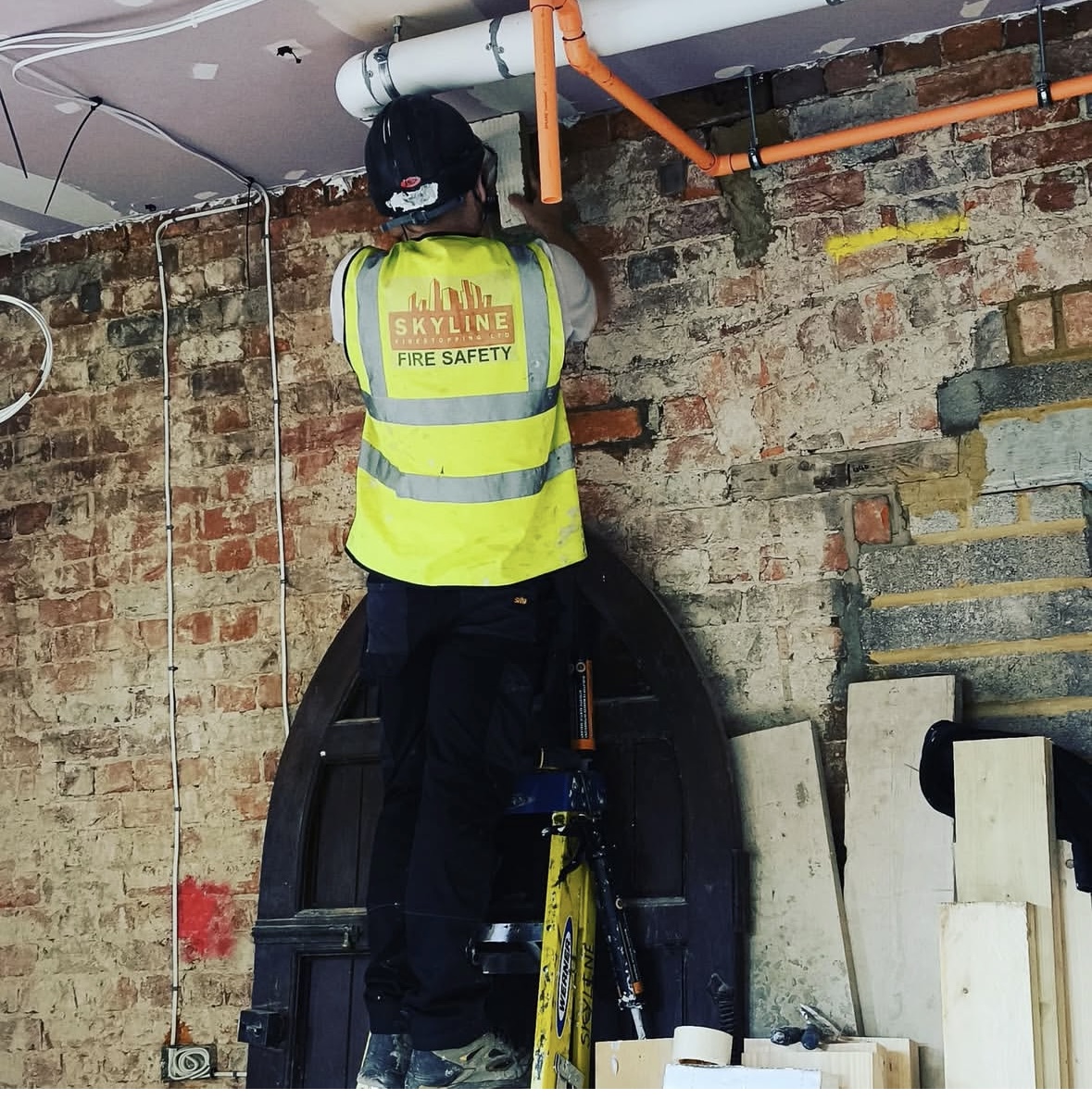
The Hidden Cost of Vague Firestopping Specifications
A specification that reads 'fire stop all penetrations' feels comprehensive. It covers everything, so nothing gets missed. In practice, it covers nothing precisely, and that ambiguity costs more than the firestopping itself.
Without defined scope, contractors price for uncertainty. Subcontractors add contingency. Variations multiply. Programme delays follow disputes about what was included and what was not. The quantity surveyor ends up defending a final account that bears little resemblance to the original budget.
The alternative is a compartmentation survey that establishes exactly what exists, what needs sealing, and what standard applies to each location. That survey report becomes the basis for accurate pricing, clear subcontract scope, and defensible evidence at completion.
What a Proper Survey Report Contains
A compartmentation survey is not a tick-box exercise. It is a floor-by-floor record of every breach in the fire-rated walls, floors and risers, each one identified, photographed and located. The report becomes the single source of truth for pricing, installation, and handover.
Location and Identification
Every penetration, joint and cavity void is recorded with its precise location. This means grid references, floor levels, and room identifiers that match the project drawings. When a subcontractor prices the work, they know exactly where they are going. When variations arise, there is no argument about whether a penetration was in scope.
Existing Condition Assessment
The survey documents what is already there. Some penetrations may have existing seals that are compliant. Others may have failed seals that need replacement. Some may have no seal at all. Without this assessment, you cannot distinguish between new work and remediation, and your budget conflates the two.
Fire Rating Requirements
Not every penetration requires the same treatment. A service riser through a 120-minute compartment floor needs a different system than a single cable through a 30-minute partition. The survey maps each location to its required fire resistance period, drawn from the fire strategy and Approved Document B. This prevents over-specification in low-risk areas and under-specification where it matters.
System Selection
Once you know the penetration type, size, and required rating, you can specify the tested system. A proper survey identifies which tested firestopping systems suit each location. Tested systems are not interchangeable. A system tested for plastic pipes cannot be substituted for cables. A system tested at 60 minutes cannot be used where 120 minutes is required. The survey prevents substitution errors that surface at inspection.
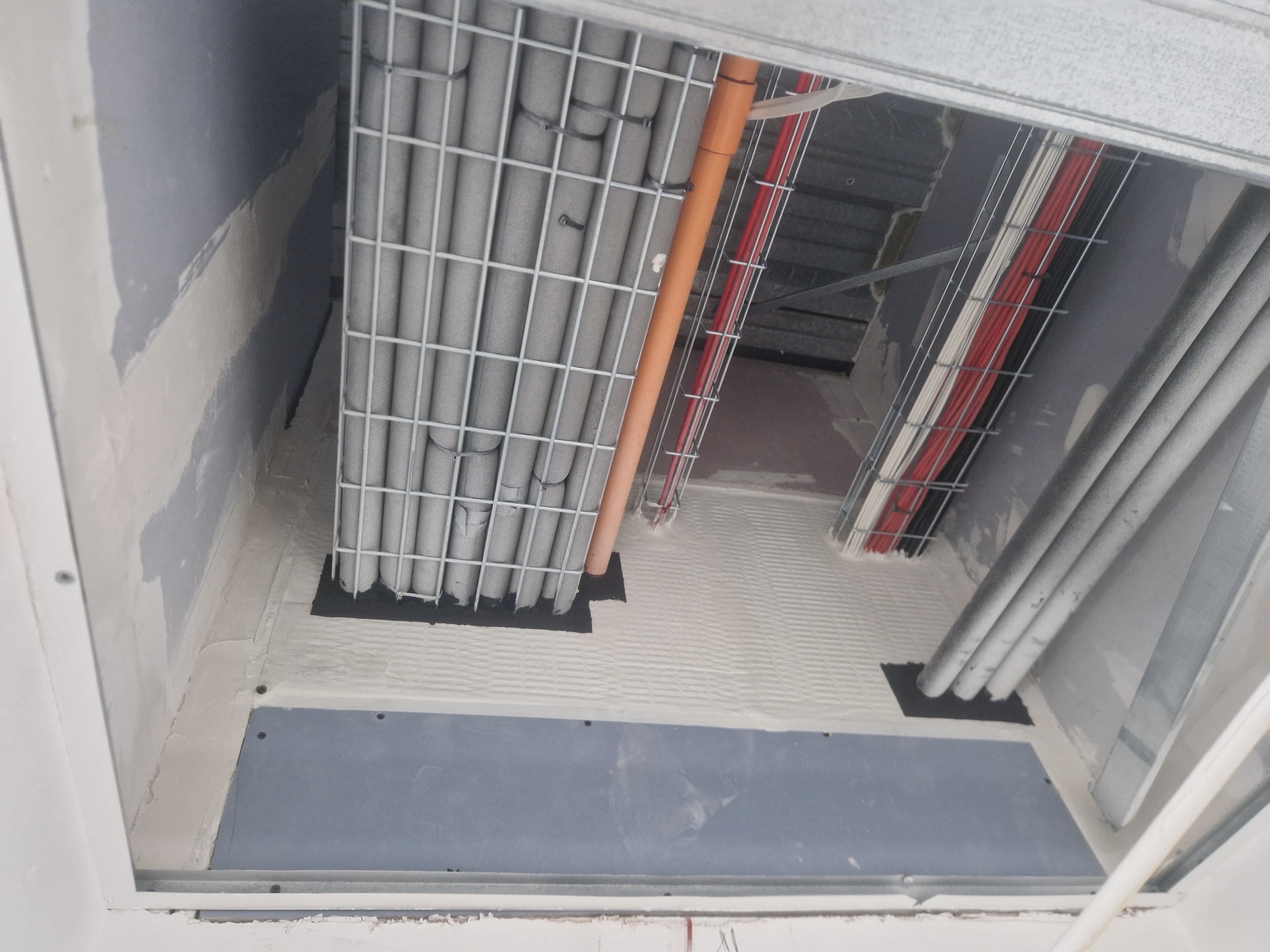
Why Each Element Protects Your Budget
Every component of a proper survey report serves a commercial purpose. Remove any one, and you reintroduce the uncertainty that inflates costs.
Accurate Quantities for Pricing
With a complete survey, the firestopping package becomes a measured item. Subcontractors price what they can see, not what they fear. Contingencies shrink. Competitive tension increases because all bidders work from the same information. The quantity surveyor can compare like with like.
Defined Scope for Subcontracts
A vague specification invites scope disputes. When the subcontract references a detailed survey report, both parties know what is included. Variations become genuine changes, not arguments about interpretation. The final account reflects actual additional work, not contested original scope.
Programme Certainty
Firestopping sits on the critical path. It must happen after services installation and before cover-up. A survey that identifies every location allows the programme to sequence the work properly. The firestopping contractor knows their access requirements. The dryliner knows when they can close up. Delays from discovered penetrations, the ones nobody knew about, reduce significantly.
Evidence for Handover
Under the Building Safety Act, higher-risk buildings require a golden thread of building information. Firestopping evidence forms part of that thread. A survey that establishes the baseline, followed by installation records that show each seal photographed before cover-up, creates the audit trail that Gateway 3 demands. Without the survey baseline, you cannot demonstrate what was there, what was done, and whether it matches the fire strategy.
The Real Cost of 'Fire Stop All Penetrations'
Consider what happens when a project runs on a vague specification. The firestopping subcontractor visits site, finds more penetrations than expected, and submits a variation. The main contractor disputes the variation because the spec said 'all penetrations' and this penetration existed when the subcontract was signed. The subcontractor argues they priced for a reasonable interpretation, not an exhaustive one.
This dispute consumes management time. It delays the work while commercial teams negotiate. It poisons the relationship for the remainder of the project. And it repeats, penetration by penetration, floor by floor.
Meanwhile, the building control officer asks for evidence that the installed seals match tested systems. The subcontractor has installation records, but nobody recorded the baseline condition. The fire strategy specifies compartment lines, but nobody mapped which penetrations fall on those lines. The evidence pack is incomplete. The completion certificate is delayed.
What Gets Missed
Vague specifications hide specific problems:
| Problem | Consequence | Survey Solution |
|---------|-------------|----------------|
| Unknown penetration count | Contingency-loaded pricing | Measured quantities |
| Unclear fire ratings | Wrong systems installed | Rating mapped to each location |
| No baseline condition | Cannot prove remediation scope | Photographic record of existing state |
| Substituted systems | Failed inspections | Tested system specified per location |
| Missing locations | Discovered at cover-up | Floor-by-floor identification |
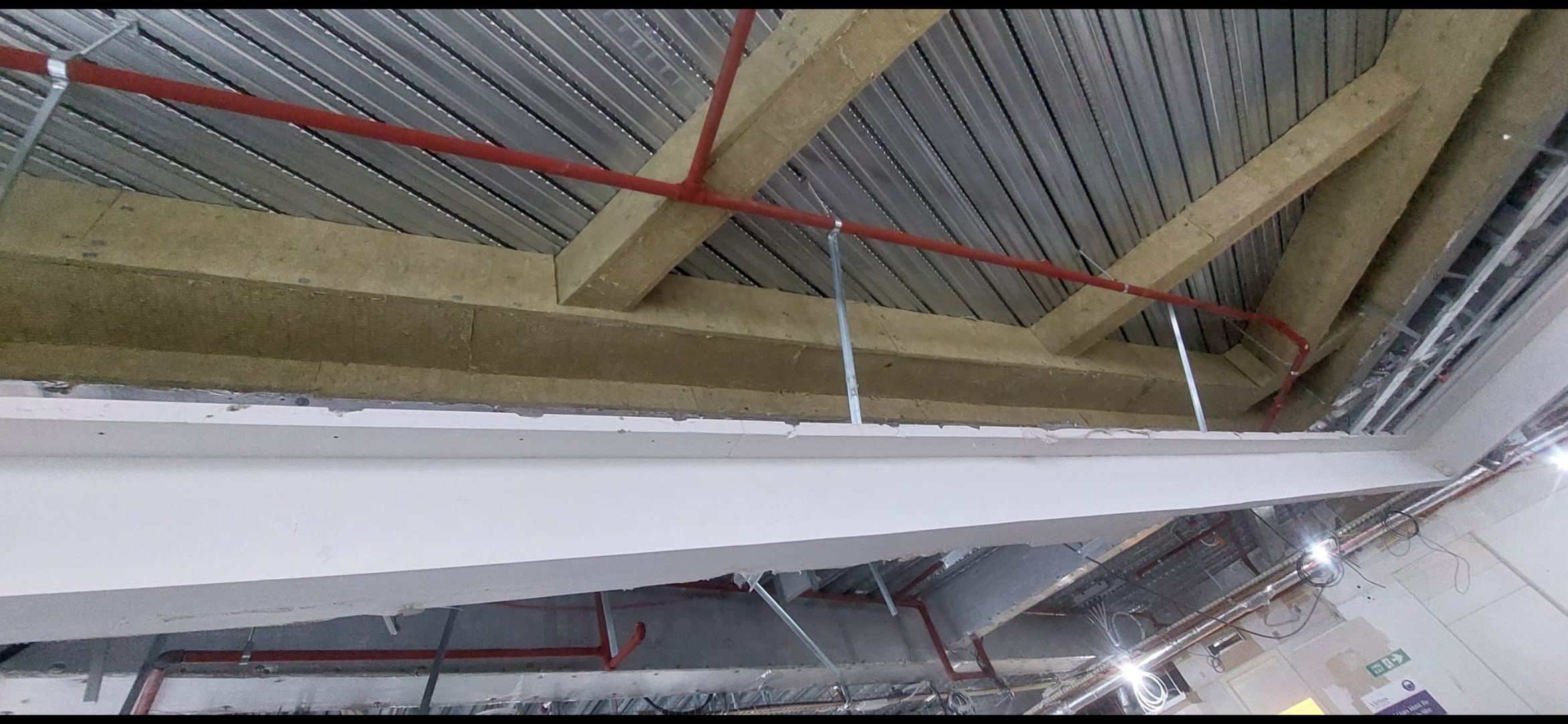
What Good Looks Like
A compartmentation survey from a BM TRADA Q-Mark certified contractor delivers more than a list of penetrations. It provides the commercial and compliance foundation for the entire firestopping package.
The survey establishes the current position. Where records do not exist, it creates them. Every breach in the fire-rated envelope is identified, photographed and located. The report maps each location to its required fire resistance period and identifies suitable tested systems.
From that foundation, pricing becomes accurate. Subcontract scope becomes clear. Programme sequencing becomes possible. And the evidence trail begins at the right point, before installation, not after disputes.
The Evidence Chain
At Skyline Firestopping, every penetration, joint and cavity is photographed before, during and after installation. Always before cover-up. Tagged and captured in the golden thread as installed. The evidence pack is handed over at completion for Gateway 3, and records are retained for 15 years.
This is what third-party certification means in practice. BM TRADA Q-Mark certification confirms that the installer follows tested systems, never substitutes, and documents the work to a standard that survives audit. Independent proof, not our word for it.
From Survey to Defensible Evidence
The survey is the starting point. What follows is installation by a certified contractor using tested systems, evidenced before cover-up, and tracked in real time. The result is firestopping that works and compliance you can defend.
For quantity surveyors managing higher-risk buildings across Greater London and the M4 corridor, this approach eliminates the budget uncertainty that vague specifications create. No surprises at Gateway 3. No disputes about what was in scope. No scramble to assemble evidence that should have been captured months earlier.
The buildings that cannot afford to get it wrong need more than a line in a specification. They need a survey that defines the scope, a contractor who delivers to that scope, and evidence that proves it.

FAQ
What is included in a compartmentation survey?
A compartmentation survey identifies every breach in the fire-rated walls, floors and risers, floor by floor. Each penetration is photographed, located with grid references, and mapped to its required fire resistance period. The report establishes the baseline condition and identifies suitable tested systems for each location.
How does a survey reduce firestopping costs?
With measured quantities and defined scope, subcontractors price what they can see rather than adding contingency for uncertainty. Competitive tension increases, variations reduce, and disputes about original scope become rare. The survey pays for itself in avoided contingency and reduced final account negotiations.
What evidence do I need for Gateway 3?
Gateway 3 requires as-built evidence demonstrating that the completed building matches the approved design. For firestopping, this means photographic records of each seal before cover-up, tagged and traceable to the fire strategy compartment lines. A baseline survey establishes what existed; installation records prove what was done.
Why does BM TRADA Q-Mark certification matter?
BM TRADA Q-Mark is third-party certification that the installer follows tested systems, never substitutes, and maintains quality management standards. At Gateway 2, this certification supports the principal contractor's competence declaration. At Gateway 3, it provides independent verification that the installation meets the design.
How long should firestopping records be retained?
Under the Building Safety Act, the Accountable Person must maintain the golden thread for the life of the building. Skyline retains installation records for 15 years, ensuring evidence remains available for audits, insurance claims, and regulatory inquiries long after completion.
Frequently asked questions
What is included in a compartmentation survey?
A compartmentation survey identifies every breach in the fire-rated walls, floors and risers, floor by floor. Each penetration is photographed, located with grid references, and mapped to its required fire resistance period.
How does a survey reduce firestopping costs?
With measured quantities and defined scope, subcontractors price what they can see rather than adding contingency for uncertainty. Competitive tension increases, variations reduce, and disputes about original scope become rare.
What evidence do I need for Gateway 3?
Gateway 3 requires photographic records of each seal before cover-up, tagged and traceable to the fire strategy compartment lines. A baseline survey establishes what existed; installation records prove what was done.
Why does BM TRADA Q-Mark certification matter?
BM TRADA Q-Mark is third-party certification that the installer follows tested systems, never substitutes, and maintains quality management standards. It provides independent verification that the installation meets the design.
How long should firestopping records be retained?
Under the Building Safety Act, the Accountable Person must maintain the golden thread for the life of the building. Skyline retains installation records for 15 years.