educate
Above-Ceiling Inspections: Why Full Documentation Now Matters
Above-ceiling firestopping inspections require photographic evidence before cover-up. Learn what documentation Building Safety Act compliance demands.
The Problem with Hidden Work
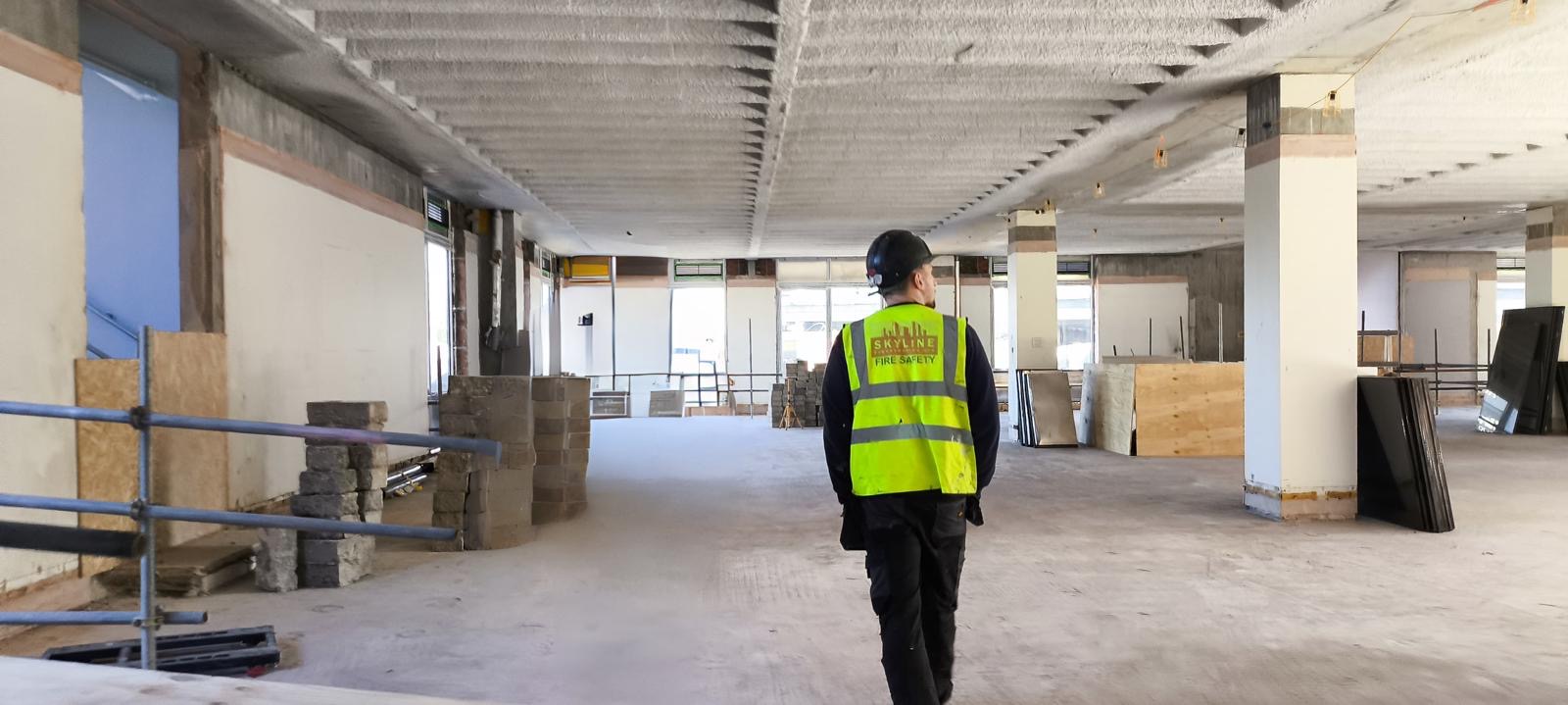
Firestopping above suspended ceilings presents a documentation challenge that catches many projects off guard. The work is installed, inspected by the site team, and then concealed behind ceiling tiles. Months later, when building control or the Building Safety Regulator requests evidence, the only proof available is whatever was captured before cover-up.
For higher-risk buildings under the Building Safety Act, this matters more than it used to. A higher-risk building is defined as 18 metres or 7 storeys (whichever is reached first) with at least 2 residential units. These buildings face Gateway 3 assessment before occupation, where as-built evidence, change-control records and the golden thread are scrutinised. Firestopping installation evidence, photographed before cover-up, tagged, and traceable, forms part of that golden thread.
The question is not whether above-ceiling firestopping was done correctly. The question is whether you can prove it was done correctly when someone asks.
What Above-Ceiling Firestopping Actually Involves
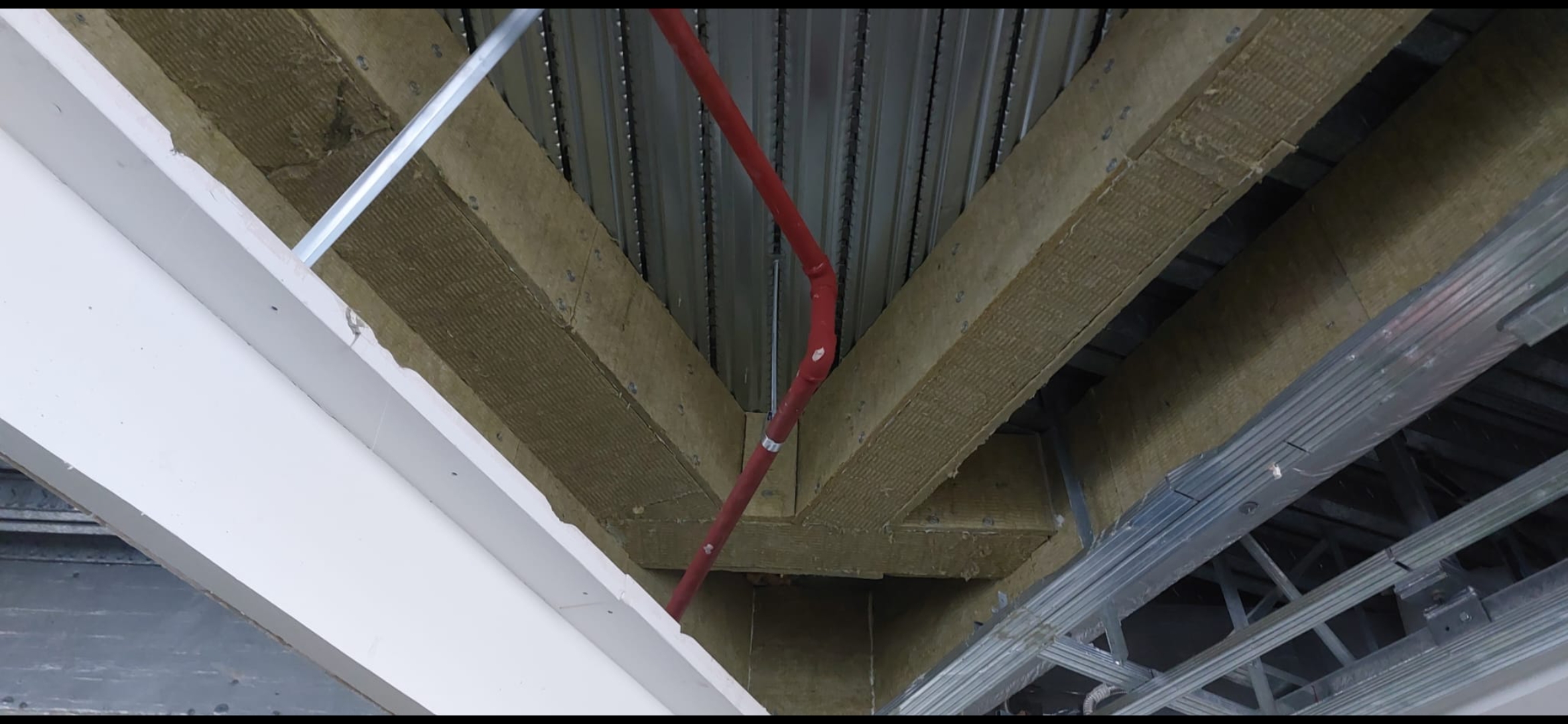
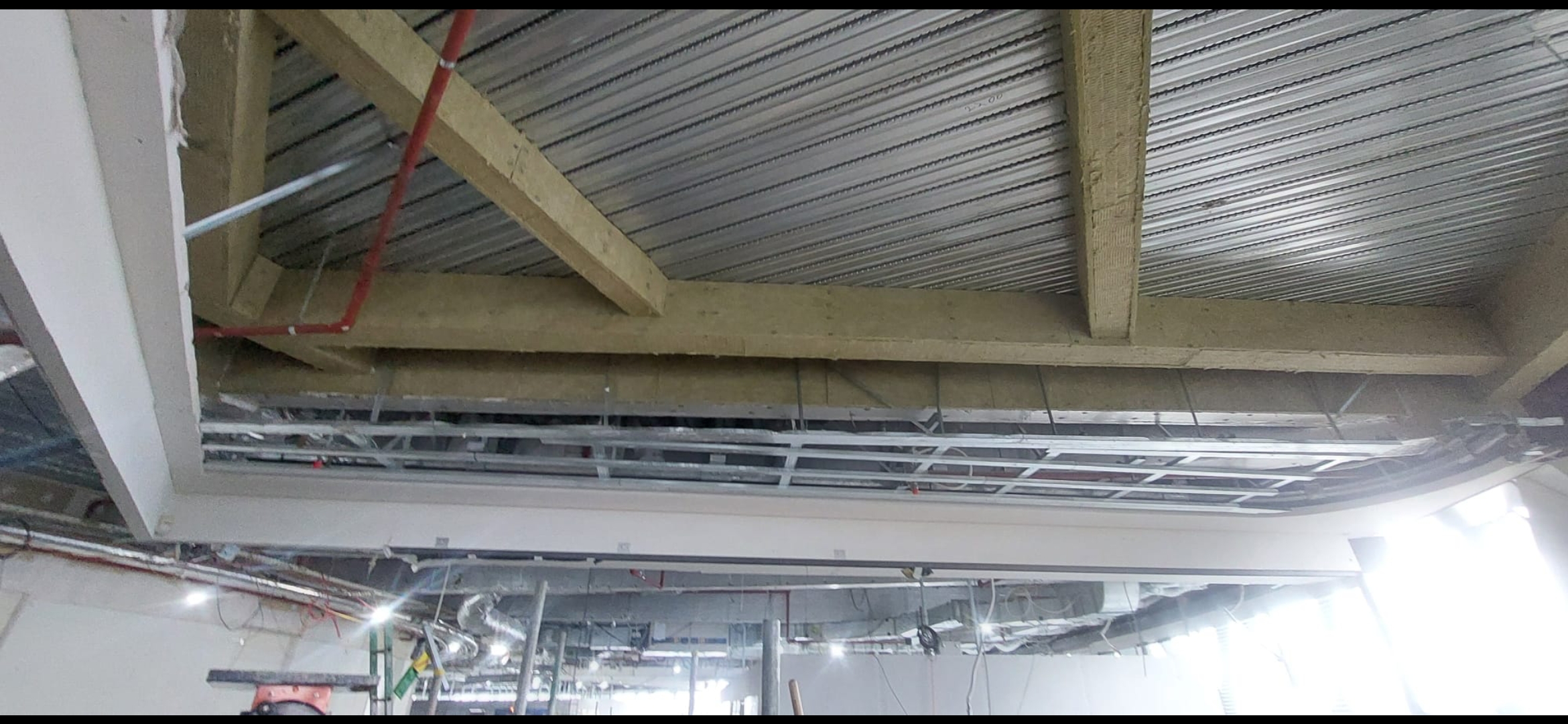
The void above a suspended ceiling is rarely empty. It contains service runs, cable trays, pipework, ductwork, and the penetrations through fire-rated walls and floors that all of these create. Each penetration through a compartment line requires sealing to maintain the fire resistance of that barrier.
Common above-ceiling firestopping includes:
- Penetration seals around cables, pipes and ducts passing through fire-rated walls and soffits
- Linear gap seals at the junction between the underside of the slab and the top of fire-rated partitions
- Cavity barriers within the ceiling void to prevent fire and smoke spread through the concealed space
- Service enclosures where risers pass through the floor slab
Each of these installations must use tested systems appropriate to the substrate, the service type, and the required fire resistance period. Understanding what firestopping involves is the starting point for specifying it correctly.
Why Documentation Requirements Have Changed
The Building Safety Act introduced the golden thread: a digital record of fire and structural safety information that must be created during design and construction, then maintained throughout the building's life. For firestopping, this means every penetration, joint and cavity should be photographed before, during and after installation, always before cover-up, tagged and captured in the golden thread as installed.
At Gateway 3, the Building Safety Regulator assesses this as-built evidence before granting the completion certificate that allows occupation. The evidence pack handed to the Accountable Person must demonstrate that what was designed is what was built, and that the work was carried out by competent installers using tested systems.
For above-ceiling work specifically, this creates a timing constraint. Once ceiling tiles are reinstated, there is no practical way to verify the firestopping beneath without destructive inspection. The documentation captured at the point of installation becomes the permanent record.
What Adequate Documentation Looks Like
A photograph alone is not documentation. Adequate records for above-ceiling firestopping should include:
| Element | Purpose |
|---------|--------|
| Location reference | Ties the seal to a specific penetration on the drawings |
| Before photo | Shows the penetration prior to sealing |
| During photo | Shows materials being applied |
| After photo | Shows the completed seal |
| Product identification | Confirms the tested system used |
| Installer details | Links to competence records |
| Date and time stamp | Establishes the installation sequence |
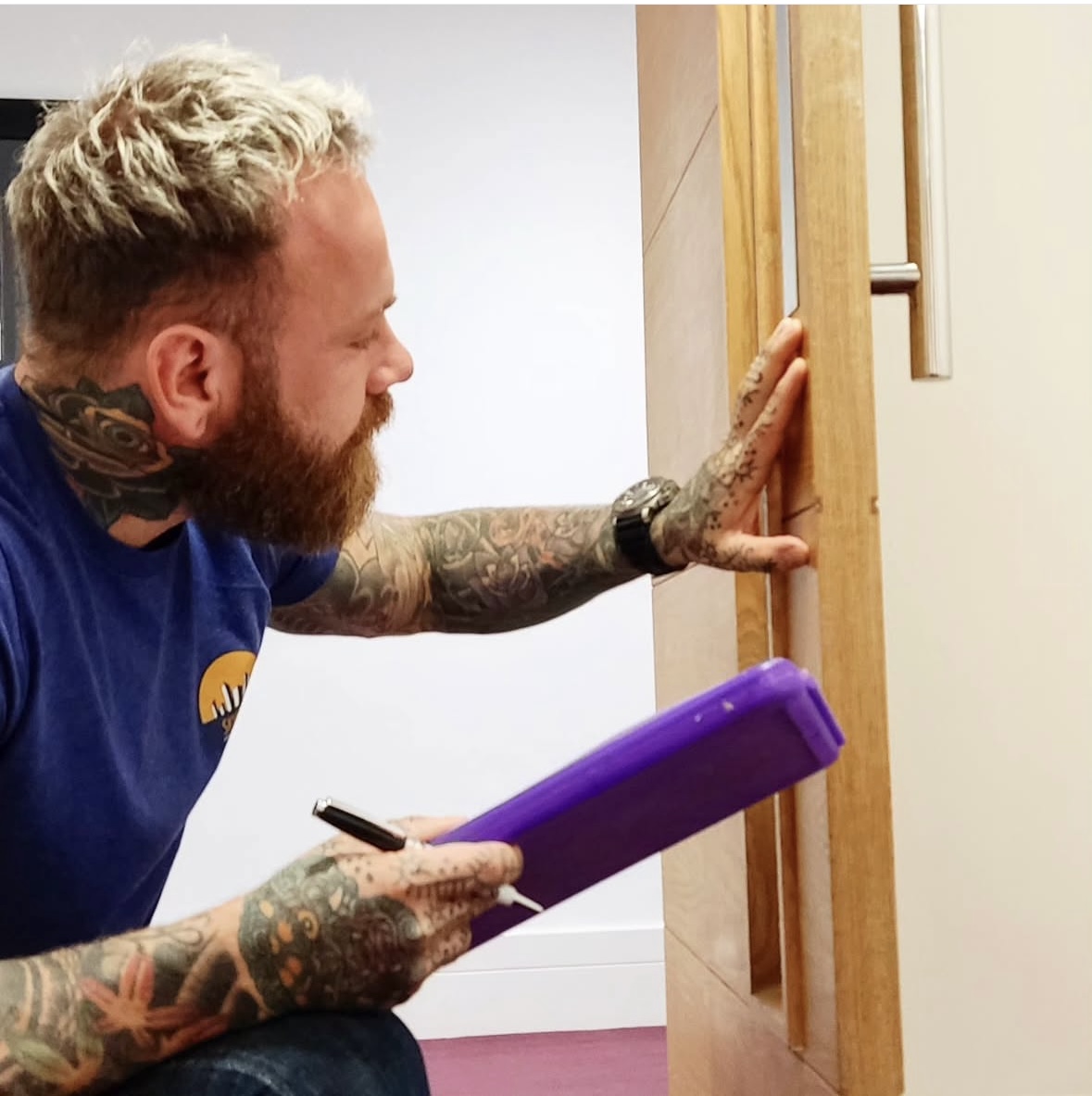
This level of detail may seem excessive until you face an RFI from building control or a stop notice questioning whether the installed work matches the approved design. At that point, the records either answer the question or they do not.
Third-party installer certification, such as BM TRADA Q-Mark, provides independent verification that the contractor operates a quality management system covering installation, supervision and record-keeping. This supports the principal contractor's competence declaration and gives building control confidence in the evidence submitted.
The Cost of Getting It Wrong
Inadequate above-ceiling documentation creates several problems that surface late in the project:
Delays at Gateway 3: If the Building Safety Regulator cannot verify firestopping compliance from the submitted evidence, they will not issue the completion certificate. The building cannot be occupied until this is resolved.
Remedial inspection costs: Without adequate records, the only way to verify compliance may be removing ceiling tiles across the building and inspecting every penetration. This is , time-consuming and expensive.
Remedial installation costs: If inspections reveal defective or missing firestopping, remedial work must be carried out before the building can proceed. Remedial firestopping in an occupied or near-complete building costs significantly more than getting it right first time.
Record retention liability: The golden thread must be maintained for the life of the building. Records must be retained for 15 years. If your documentation is incomplete now, that gap persists for the building's entire existence.
Practical Steps for Quantity Surveyors
As a QS, you are tracking costs, managing variations, and trying to avoid surprises that blow the budget or the programme. Above-ceiling firestopping documentation is a risk area worth addressing early.
At Tender Stage
Specify documentation requirements explicitly. The firestopping contractor should provide:
- A schedule of all penetrations requiring sealing
- Confirmation of the tested systems to be used
- A sample of their evidence pack format
- Confirmation of third-party certification status
Pricing that does not include adequate documentation is incomplete pricing. The cost of capturing evidence is part of the work.
During Construction
Coordinate ceiling close-up with firestopping sign-off. The sequence matters: firestopping must be installed, photographed, and recorded before ceiling tiles are reinstated. If trades are working out of sequence, above-ceiling firestopping evidence may be compromised.
A compartmentation survey before ceiling close-up can verify that all penetrations have been addressed and documented. This is cheaper than discovering gaps at Gateway 3.
Before Practical Completion
Request the evidence pack and review it against the penetration schedule. Every penetration should have corresponding documentation. Gaps identified now can be addressed while access is still straightforward.
The golden thread requirements mean this evidence pack must be handed to the Accountable Person at completion. It is not optional paperwork; it is a statutory requirement for higher-risk buildings.
The Difference Third-Party Certification Makes
Not all firestopping contractors operate to the same standard. A generalist contractor may install firestopping as part of a broader scope, but without the quality management systems that ensure consistent documentation.
BM TRADA Q-Mark certification requires the contractor to demonstrate:
- Use of tested systems, never substituted
- Trained and competent installers
- Quality management covering installation and records
- Regular third-party audits
For above-ceiling work that will be concealed for the building's lifetime, this independent verification provides assurance that the documentation reflects reality. When the evidence is all you have, the credibility of that evidence matters.
FAQ
What happens if above-ceiling firestopping was installed but not documented?
Without documentation, you cannot prove compliance. The options are destructive inspection to verify the work, or removal and reinstallation with proper documentation. Neither is cheap, and both cause programme delays.
Who is responsible for firestopping documentation on a higher-risk building?
The principal contractor is responsible for ensuring the golden thread is created and maintained during construction. This includes firestopping evidence. The firestopping contractor should provide the documentation, but the principal contractor must ensure it is captured and retained.
How long must firestopping records be kept?
Records must be retained for 15 years. For higher-risk buildings, the golden thread must be maintained for the life of the building and handed to the Accountable Person at completion.
Can existing buildings with poor firestopping records be brought up to standard?
Yes. A compartmentation survey can establish the current position, identifying every breach in fire-rated walls, floors and risers. Remedial firestopping can then address defects with certified rework and proper evidence.
What is the difference between Gateway 2 and Gateway 3 for firestopping?
Gateway 2 is building control approval before construction starts, assessing the design and the competence of dutyholders. Gateway 3 is the completion certificate before occupation, assessing as-built evidence including firestopping installation records. Photographic evidence of installed work belongs to Gateway 3, not Gateway 2.
Frequently asked questions
What happens if above-ceiling firestopping was installed but not documented?
Without documentation, you cannot prove compliance. The options are destructive inspection to verify the work, or removal and reinstallation with proper documentation. Neither is cheap, and both cause programme delays.
Who is responsible for firestopping documentation on a higher-risk building?
The principal contractor is responsible for ensuring the golden thread is created and maintained during construction. The firestopping contractor should provide the documentation, but the principal contractor must ensure it is captured and retained.
How long must firestopping records be kept?
Records must be retained for 15 years. For higher-risk buildings, the golden thread must be maintained for the life of the building and handed to the Accountable Person at completion.
Can existing buildings with poor firestopping records be brought up to standard?
Yes. A compartmentation survey can establish the current position, identifying every breach in fire-rated walls, floors and risers. Remedial firestopping can then address defects with certified rework and proper evidence.
What is the difference between Gateway 2 and Gateway 3 for firestopping?
Gateway 2 is building control approval before construction starts, assessing the design and dutyholder competence. Gateway 3 is the completion certificate before occupation, assessing as-built evidence including firestopping installation records.