
educate
Five Things a Firestopping Survey Report Must Tell You
What should a compartmentation survey actually deliver? Five essentials every QS needs in a firestopping report to avoid budget surprises and compliance gaps.
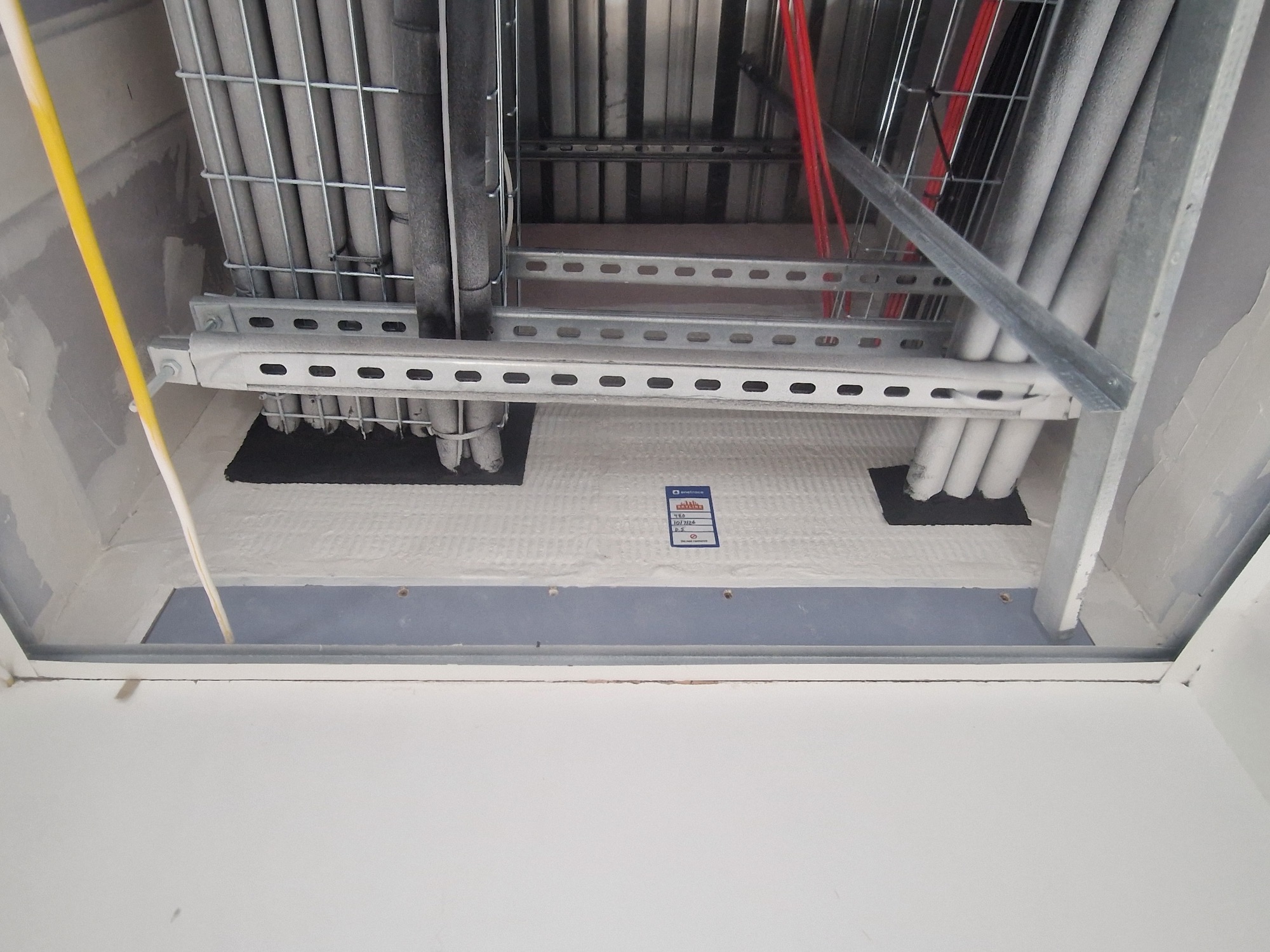
What a Firestopping Survey Report Must Actually Deliver
A compartmentation survey is only as useful as the report it produces. Too many survey reports arrive as vague summaries, leaving quantity surveyors to guess at remediation scope, chase contractors for missing details, and explain budget overruns to project managers who expected certainty.
The right report gives you control. It tells you exactly what failed, where, how serious the breach is, and what fixing it will cost. No surprises at tender stage. No scope creep mid-project. No uncomfortable conversations when building control asks for evidence you cannot produce.
Here are the five things every firestopping survey report must include, and why each one matters to your budget, programme, and professional reputation.
1. Precise Location of Every Breach
A report that says "multiple penetration failures in the riser" is useless for pricing remediation or coordinating trades. You need floor-by-floor, room-by-room, penetration-by-penetration detail.
Every breach should be identified with:
- Building, floor, and room reference
- Wall or floor element affected
- Penetration type (pipe, cable, tray, duct, linear gap)
- Unique reference number that links to photographic evidence
This level of detail lets you issue accurate tender packages, schedule access with other trades, and track remediation progress without revisiting the site to work out what the surveyor actually meant.
A proper compartmentation survey establishes the current position systematically: every breach in the fire-rated walls, floors, and risers identified, photographed, and located.
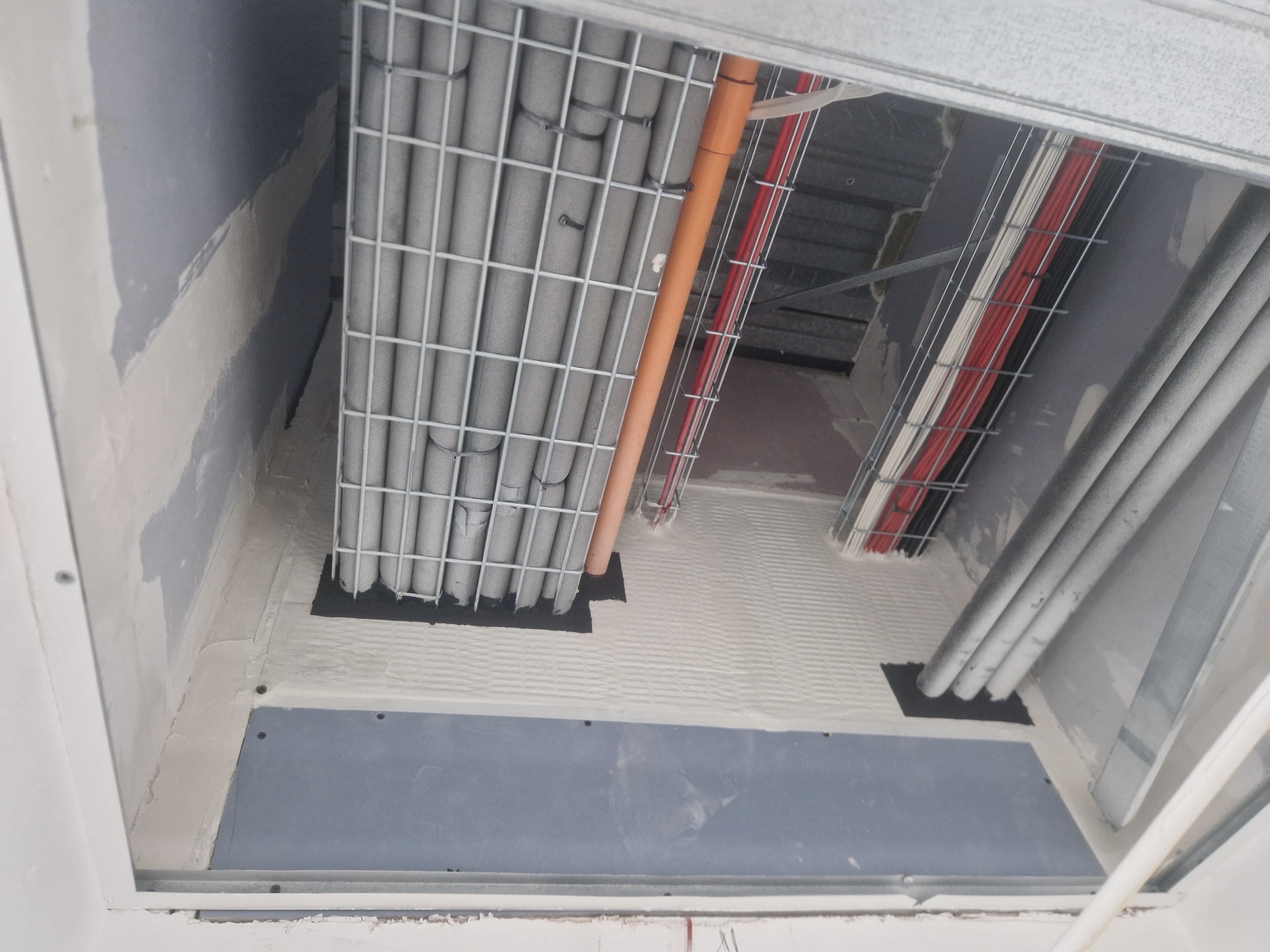
2. Fire Rating of the Affected Element
Not all breaches carry equal risk. A failed seal in a 30-minute compartment wall is a different problem from the same failure in a 120-minute protected shaft.
Your report must state the required fire resistance period for each affected element. This determines:
- Which tested firestopping systems are suitable for remediation
- Material specifications and therefore cost
- Whether the breach affects means of escape, protected shafts, or compartment floors
- The regulatory significance under Approved Document B
Without this information, you cannot specify remedial work accurately. You risk either over-specifying (wasting budget) or under-specifying (failing the next inspection).
Understanding how fire and smoke spread through a building helps explain why the rating matters: a breach in a compartment line can allow fire to bypass the entire passive protection strategy.
3. Photographic Evidence Linked to Each Defect
Photographs are not optional extras. They are the foundation of defensible records and the only way to demonstrate the condition found before any remedial work begins.
Each photograph should:
- Show the defect clearly, with sufficient context to identify the location
- Include a reference board or tag linking to the schedule
- Be date-stamped
- Be retained as part of the building's fire safety records
For higher-risk buildings under the Building Safety Act, photographic evidence forms part of the golden thread. The Accountable Person must maintain records that demonstrate how the building's fire safety systems were assessed and maintained. A survey report without photographs is a gap in that chain of evidence.
This matters at Gateway 3, when the Building Safety Regulator assesses as-built evidence and the golden thread handed to the Accountable Person.
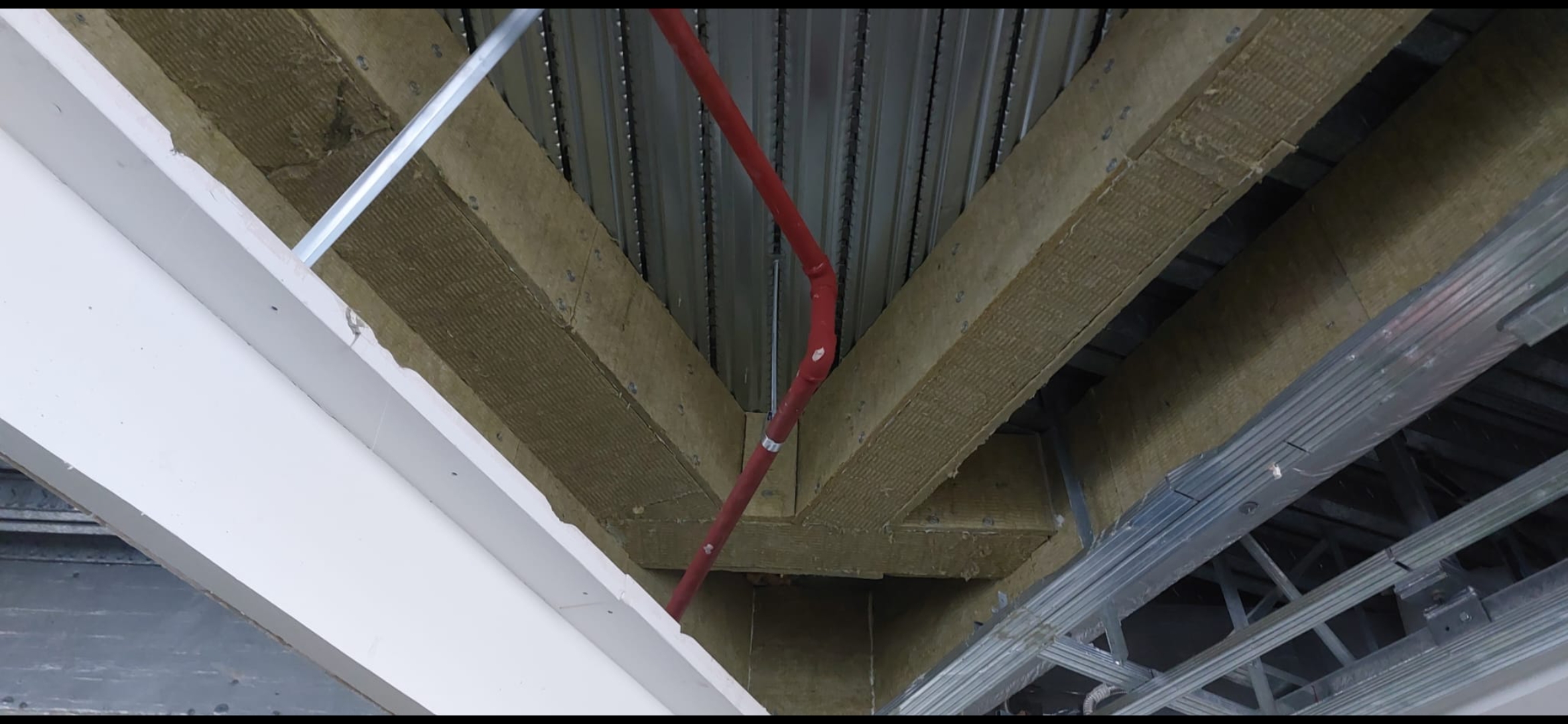
4. Remediation Scope and Specification
Identifying defects is only half the job. A useful report tells you what needs to happen to fix them.
For each breach, the report should specify:
- The type of remediation required (seal, replace, upgrade)
- The tested firestopping system suitable for that penetration type and fire rating
- Any access requirements or enabling works
- Whether the defect requires immediate attention or can be programmed into planned maintenance
This is where surveyor competence shows. A certified firestopping contractor understands which tested systems apply to which configurations. A generalist surveyor may identify that something is wrong without knowing how to fix it correctly.
The specification should reference tested systems that match the penetration type, substrate, and required fire resistance. Substitutions and site-mixed solutions are where compliance fails.
5. Clear Cost Estimate for Remedial Works
Budget certainty is what separates a useful survey from an expensive problem.
Your report should include:
- A priced schedule of remedial works, broken down by location and defect type
- Any assumptions about access, scaffolding, or enabling works
- A clear statement of what is included and excluded
- Payment terms and any conditions
Skyline's Intrusion Survey, for example, is offered at a fixed price agreed before work begins. For managing agents with failed FRA surveys, the guarantee is straightforward: if the building does not pass its FRA, you do not pay for the survey.
This approach removes the budget uncertainty that makes quantity surveyors nervous. You know the survey cost upfront. You know the remediation scope before you commit. No scope creep. No surprise invoices.

What Happens When Reports Fall Short
Incomplete survey reports create downstream problems that cost more than the survey itself:
| Missing Element | Consequence |
|---|---|
| Vague locations | Trades cannot price accurately; site visits multiply |
| No fire ratings | Wrong systems specified; work fails inspection |
| No photographs | No evidence for golden thread; audit gaps |
| No specification | Remediation scope unclear; variations inevitable |
| No cost estimate | Budget approval delayed; programme slips |
The pattern is familiar: a cheap survey produces a thin report, which produces a vague tender, which produces variations, which produces budget overruns, which produces difficult conversations with your project manager.
Choosing a Survey Provider
The quality of the report depends on the competence of the surveyor. Look for:
- Third-party certification (BM TRADA Q-Mark demonstrates independently verified competence)
- Experience with the building type and fire strategy
- A clear scope of work and deliverables before you commit
- Sample reports so you can see what you will actually receive
A compartmentation survey from a certified contractor delivers the detail you need: floor by floor, every breach identified, photographed, and located, with remediation scope and cost clarity.
FAQ
What is a compartmentation survey?
A compartmentation survey assesses the fire-rated walls, floors, and barriers in a building to identify breaches, missing firestopping, and defects that compromise the designed fire compartmentation. The output is a detailed report with locations, photographs, and remediation recommendations.
How much does a fire compartmentation survey cost?
Costs vary by building size and complexity. Skyline's Intrusion Survey is offered at a fixed price agreed before work begins, removing budget uncertainty. For managing agents with failed FRA surveys, if the building does not pass its FRA, you do not pay for the survey.
Who needs a firestopping survey?
Building owners, managing agents, and developers responsible for fire safety compliance. For higher-risk buildings under the Building Safety Act, the Accountable Person must maintain records demonstrating how fire safety systems are assessed and maintained.
How long are survey records retained?
Skyline retains records for 15 years, supporting the golden thread requirements for higher-risk buildings and providing long-term audit evidence.
What is the difference between a survey and an audit?
A survey establishes the current condition of firestopping in a building. An audit, such as a Golden Thread Readiness Review, assesses existing firestopping records against the Building Safety Act golden thread duty to identify documentation gaps.
Get the Report You Actually Need
A firestopping survey should give you certainty: exact locations, fire ratings, photographs, specifications, and costs. If your current reports leave you guessing, the problem is not the building. It is the surveyor.
Book your fire safety survey with Skyline Firestopping. Fixed-price, floor-by-floor, every breach identified and evidenced. No surprises at completion.
Frequently asked questions
What is a compartmentation survey?
A compartmentation survey assesses the fire-rated walls, floors, and barriers in a building to identify breaches, missing firestopping, and defects that compromise the designed fire compartmentation. The output is a detailed report with locations, photographs, and remediation recommendations.
How much does a fire compartmentation survey cost?
Costs vary by building size and complexity. Skyline's Intrusion Survey is offered at a fixed price agreed before work begins. For managing agents with failed FRA surveys, if the building does not pass its FRA, you do not pay for the survey.
Who needs a firestopping survey?
Building owners, managing agents, and developers responsible for fire safety compliance. For higher-risk buildings under the Building Safety Act, the Accountable Person must maintain records demonstrating how fire safety systems are assessed and maintained.
How long are survey records retained?
Skyline retains records for 15 years, supporting the golden thread requirements for higher-risk buildings and providing long-term audit evidence.
What is the difference between a survey and an audit?
A survey establishes the current condition of firestopping in a building. An audit, such as a Golden Thread Readiness Review, assesses existing firestopping records against the Building Safety Act golden thread duty to identify documentation gaps.